AUDIO OPTION FOR REVIEW OF STAR TREK: DISCOVERY
SHORT TAKE:
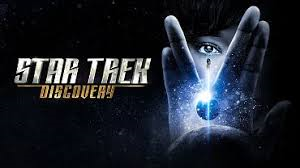
A two season Star Trek show which was released (in real life) just before Picard, it takes a stab at gap filling in the story arcs of Star Trek in general and the characters of Spock and Pike in particular (even though they do not show up until the second season) during the (reel life) period between the two original pilots from the 1960’s.
WHO SHOULD WATCH:
Adults only for: language, graphic violence, sexuality, promotion of alternative lifestyles and frequent examples of – best way to put it —- conduct unbecoming a Starfleet officer.
LONG TAKE:
Star Trek, “The Original Series”, with Captain Kirk, debuted in 1963. I was four years old and lived in a house full of science fiction fans. It does not take Sherlock Holmes to correctly surmise from that I have followed Star Trek my whole life.
And in case anyone doesn’t know, and relevant to this article, as referenced above, there were TWO Star Trek pilots: the FIRST one with Captain Pike, and the SECOND, but better known one, with Captain Kirk.
Roddenberry, the brains behind everything Star Trek, (the way Lucas is for Star Wars), had some clout and a LOT of persistence. So when the powers that be did not like the first pilot, Roddenberry managed, in an instance as rare as finding a herd of unicorns, to persuade the producers to give him another shot at it. He changed much of the lead cast and told a different tale. The rest is history. Discovery looks at knitting these two scenarios together into the whole cloth of the Star Trek Universe.
I have seen all the filmed live iterations: TOS, Next Generation, Voyager, Deep Space Nine, Enterprise, Picard, ALL the movies in both the prime and alternate time lines – and now into the fold comes Discovery. I have mixed feelings about this show.
The original Star Trek concept in 1963 was promoted by Roddenberry as “Wagon Train to the stars” to the powers that held the money. In fact, Roddenberry used science fiction as clever social commentary, much of which is still quite relevant almost six decades later.
As a framework for that cultural analysis was the idea that the best of mankind would strive and survive to reach out to the stars and, as has been so many times quoted, parodied, and ultimately followed, “…to seek out new life and new civilizations. To boldly go where no man has gone before!” (Cue theme that only The Queen of the Night could sing.) Possibly the most famous split infinitive in literary history.
The eloquent words and profoundly inspiring message have been part of what has kept the Star Trek franchise alive for almost sixty years, across seven different shows, with seven different casts, covering hundreds of shows, and inspiring thirteen movies; not to mention: cartoons, novels, graphic novels, audio books, fanzines, comic cons, animation, games, technical manuals, coffee cups, bath mats, life sized cut outs, costumes (deep breath) – the list goes on and on.
One of the uplifting concepts that has kept this boat afloat (pun intended as the Star Trek universe has always had a naval feel) is the idea that these frontiers will be breached by the best and the brightest, the most humane and brave, the self-sacrificing, the merciful and the altruistic, to insure that we would go forth to that (following homages intended) Undiscovered Country (Star Trek VI) of this Final Frontier (Star Trek V) with our best foot forward.
Unfortunately, this is not what Discovery did. It began with a mutineer, Michael Burnham (Sonequa Martin-Green) starting a war with the Klingons. Huh!??? And much of the next two years deals with the direct and indirect fallout from that. Granted, good comes out of this catastrophe, as well as discoveries of galactic-sized threats which are averted, in part, due to the setting in motion of events stemming from this war. (It gets complicated.) But my teeth were set on edge right away because this was NOT the Starfleet I remembered.
Set (in reel life) about 10 years before Kirk and not long after Captain Archer, I do acknowledge that this is Starfleet in its infancy – even embryonic. Captain Archer, in the series Enterprise, stepped WAAAY over the line more than once: hypocritically denying assistance to a freighter in one show, running rough shod over an alien species during a diplomatic mission in another, acting abrasively and belligerently to his crew on the bridge, and on one noteworthy occasion leaving a hatchery of sentient infants to die on a fading ship – because they were an enemy insectoid race – DESPITE the fact they were innocents. I have a lot of trouble with Enterprise too.
That all being said there ARE interesting characters and intriguing storylines within Discovery. There is, for example, a backstory on Spock (Ethan Peck, grandson of Gregory Peck) no one anticipated and information on Pike which fits nicely with the character to which we were introduced 60 (real) years ago. Like it or hate it or love it, I understand this is an effort by the crafters of the Star Trek universe to tie up the ten (reel) years between the first pilot with Pike and the opening proper in “Where No Man Has Gone Before” which introduced us to Kirk and company.
The cast is hit and miss.
Captain Pike’s character in Discovery, introduced at the tip end of season one, was a breath of fresh air in embodying the characteristics of the Starfleet captains with whom we grew up. I look forward to the future planned shows, Star Trek: Strange New Worlds with Anson Mount’s Pike.
You will meet, if you will excuse the unavoidable pun, a much darker Mudd (Rainn Wilson, The Office alum) as in Harcourt Fenton —, than we saw in the original series.
A line often attributed to Louis B Mayer is: “If you want to send a message, call Western Union”. Unfortunately, there has been a trickle which has grown into a monsoon of disregard for this advice amongst the writers, directors and producers of TV shows and movies over the last few decades.
One of the demonstrations of distracting and overt PC writing in Discovery is the prominent portrayal of a homosexual couple by engineer Stamets (Anthony Rapp) and Dr. Culber (Wilson Cruz). As there are no other featured couples and as their relationship figures heavily as unnecessary subplot fodder in a number of the episodes, this smacks more of political correctness then plot craft. The shoe-horning in of scenes is distracting as well as making the show inappropriate for non-adults. To be fair, Kirk’s promiscuous bed hopping did not exactly contribute to a G-rated atmosphere either. But at least Kirk’s antics were to promote ratings amongst the teenage boys who already dominated the demographics for Star Trek: TOS. The relationship between Stamets and Culber is propagandistic posturing.
In addition, their relationship as portrayed was neither dynamic nor convincing. Dr. Who’s pansexual Captain Jack Harkness frequently conveyed, in one flirty grin to a total stranger, more connection and interest than Culber and Stamets did towards each other in two seasons.
Cruz as Culber does the heavy emotional lifting but only succeeds in coming off as whiny. Stamets is an interesting stand alone character as an aloof and snobby, but brilliant, engineer wrestling with a technology new to the Star Trek universe: a Spore Drive, which allows instantaneous travel from one point in the galaxy to another. Stamets was obviously in love with THAT. But there is very little chemistry between the two men.
Tilly (Mary Wiseman), another engineer, while also brilliant, should not have been allowed anywhere near a star ship bridge. She is flighty, immature, overly chatty, and tends to wander off in flights of irrelevance even in the midst of a crisis. This behavior would have either been trained out of her at the Academy or she would have been dismissed. And in one of the “Short Trek” shows, (15 minute lagniappe episodes), Tilly commits an outright crime of aiding and abetting a stowaway when she helps one to their home planet without even reporting their presence on board the ship. This would have been court-martial level grounds for cashiering in anybody’s reality aboard a military vessel of any kind.
There are bright spots. Saru (Doug Jones, who has the dubious honor of having played the amphibian man in the horrible Shape of Water SEE REVIEW HERE), a Kelpian, is the first officer. He is from a species which we have never before seen, and is unique to the crew. Jones, with his 6 foot 3-1/2 inch tall frame gives the skeletal visaged Saru a surprising physical grace. Saru is an officer who is thoughtful, considered, intelligent, calm under fire, attentive to the advice of the other crew, and who makes plain old good decisions. In the first season Saru is the one who reminds me the most of the Starfleet personality we should have had all along.
Jason Isaacs is Captain Lorca, of whom I’m hesitant to say much for fear of giving spoilers. Suffice to say that while more in line with the Star Trek: TOS personality, he pushes the envelope too much and too hard to be a comfortable character. These feelings ultimately fit well with his story arc and the structure of the two season plot but it can be very off-putting on first viewing.
The music by Jeff Russo (Star Trek: Picard) provides the same inspiring atmosphere we have come to know and love from the Star Trek universe. The special effects, gadgets and prosthetics are pretty cool, but nothing we haven’t seen before in the best of some of the shows.
The dialogue has too much profanity especially for a starship bridge crew, who are on the bridge and on duty. And remember I’m evaluating from the point of view of Star Trek not the reality of a naval cruiser on Earth, though I suspect some of the cavalier dialogue would not be well tolerated on a modern-day destroyer bridge either.
There’s been a good deal of complaint about the female-heavy cast: Martin-Green’s Burnham, Wiseman’s Tilly, Emily Coutts’ cybernetically enhanced Detmer, Oyin Oladejo’s Owosekun, Sarah Mitich’s android/human hybrid Airiam, Michelle Yeoh’s Captain Georgiou, Mary Chieffo’s female Klingon Chancellor L’Rell, Jane Brooks’ Admiral Cornwall, Rebecca (pre-Lawrence “Mystique” from X-Men) Romijn’s Number One – the list goes on. I’d have to agree. There is a grossly disproportionate number of prominent women in the show, especially when you consider that many of the men that DO make it to the cast list are either given only passing notice, like Ronnie Rowe’s Lt. Bryce, or are written as women-dependent and emotionally fragile, like former POW Ash Tyler (played by Shazad Letif).
While the women did a good job comporting themselves (mostly – with the exception of the aforementioned Tilly) as command crew who just happen to be female (as opposed to the creativity-destroying reverse) this is NOT the Amazonian brigade nor community theater! There MUST have been more men auditioning for these parts than is reflected in the casting choices.
Nonetheless, after Pike, my favorite character would have to be engineer Reno (played by Tig Notaro from Instant Family SEE REVIEW HERE) who comes late onto the scene. Carrying the blunt honesty of a single minded nerd who gets along better with her equipment than people, she is funny and refreshingly abrasive in her no nonsense exchanges. Sort of like a female Henry Higgins she treats everyone the same – as though they were ALL between her and the solution to the engineering problem at hand and life would be so much easier if they would just get out of her way! Yet, also like Higgins, she is almost preternaturally observant to those around her and, as such, and as she has little filter, is often able to offer unexpectedly apt advice.
So, overall, despite the heavy handed estrogen injections, the occasional forays into soap opera territory, and the aspects of the show that make it inappropriate for youths, I’d say Discovery was worth the time, if for no other reason than to tie up previously loose ends and establish a launching pad for Pike’s Star Trek: Strange New Worlds.
But adults only – it’s neither the relatively more innocent nor mostly the example to be followed, as was the Star Trek of our youth. Even so, it still manages to point us to the stars.











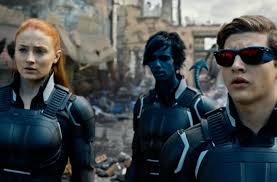 the new/retro X-Men then flavor with a teaspoon of



















 Ampere
 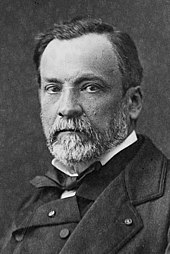 Pasteur
 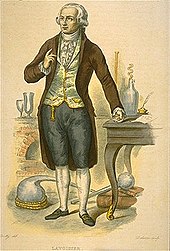 Lavoisier
  Kolbika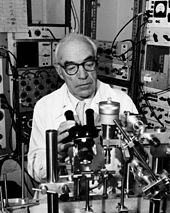
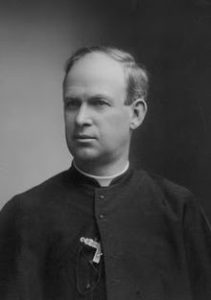 Zahm
Zahm
 Chardin
  Copernicus
  Gassendi
  Bacon
Bacon  Ockham
  Pacholczyk
  Mersenne
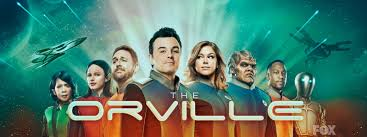
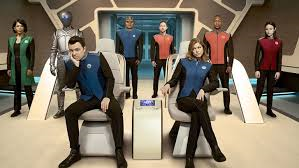
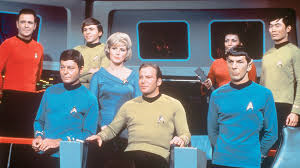
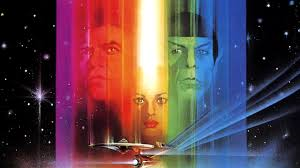
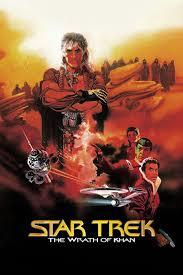
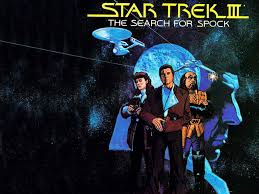
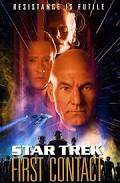
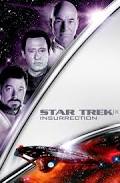
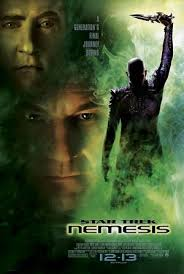
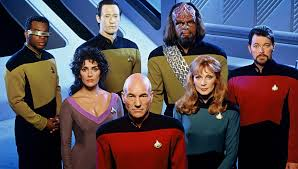 None of the other Star Trek shows quite hit the bull's eye for me the way STNG did. And the last show to date,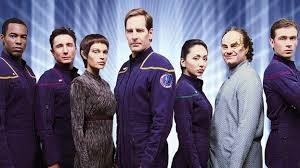
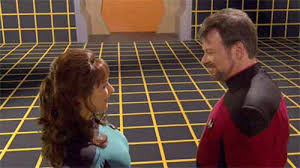
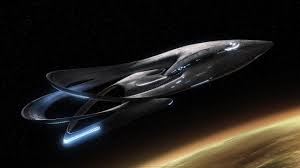
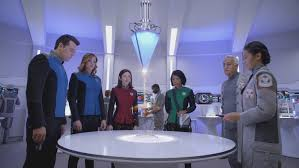
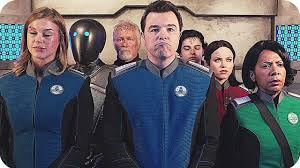
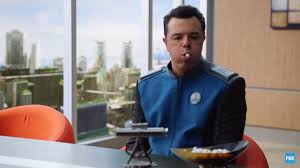
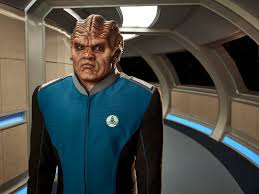
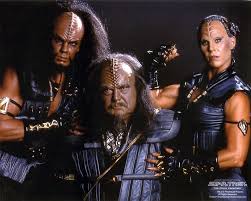


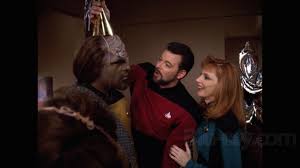
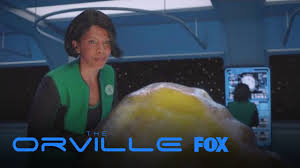
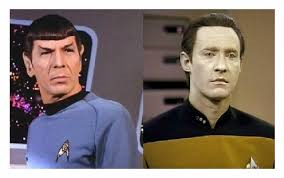 Vulcans and Data. Then there is the caring but tough female chief medical officer, Dr. Penny Johnson Jerald (Claire Finn – Kassidy Yates from Deep Space Nine),
 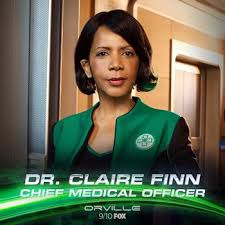 counterpart to Trek's Dr. Crusher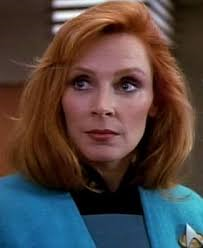

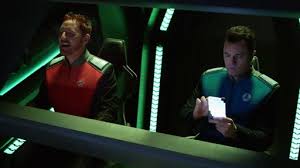
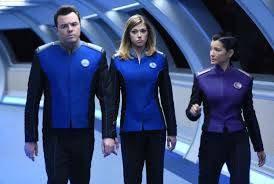
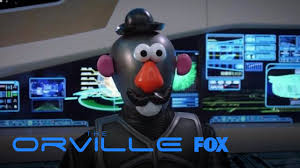 One early sub-plot examined a mainstay topic of our favorite emotionless aliens – humor. Without giving any spoilers, let's just say that there is a more "no holds barred" to their…ahem…Enterprises. The humor is rougher and slightly bawdier but nothing you wouldn't hear in a day to day after hours conversation with close friends. They gossip, they gripe, they insult, they even occasionally threaten each other – and that's just on the bridge.
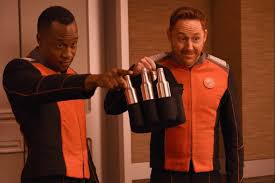
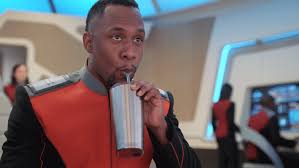 The command crew drink sodas and beer and watch old TV show excerpts while on duty.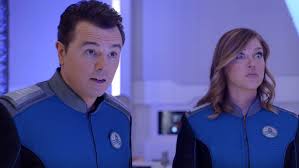


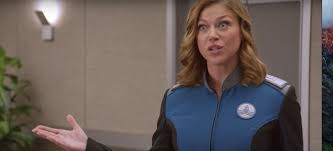
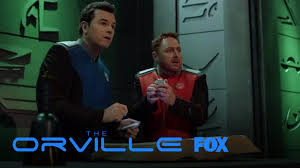
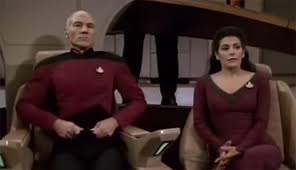 Don't get me wrong – I LOVE the proper Star Trek universe. But these guys just SAY the things we KNOW darned well Kirk or Picard or Scotty or Dr. Crusher or even Data were DYING to say but couldn't – like Captain Mercer to a bigoted and cruely rude Moclus: "Dude, you have been a colassal d*** all friggin' day. Shut the H*** up." It wasn't polite or proper etiquette for a STAR TREK captain, but I'd be lying if I said I didn't want to applaud and laugh when he said it.
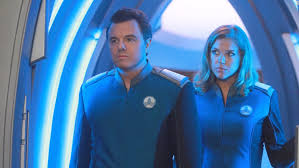 And the storylines follow quintessential threads: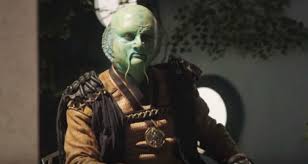
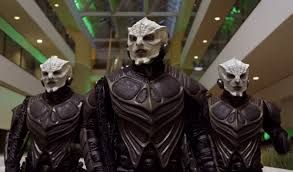
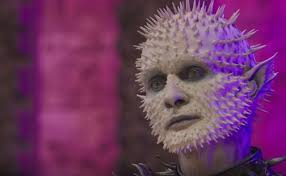
 While they don't take themselves too seriously, they present the characters and stories with obvious respect and affection for the source concepts. There is humor but fights break out, career making/breaking decisions have to be made, people die and the scenarios have hazard – just like the original ST:TOS – if that was happening at your average family holiday get together.
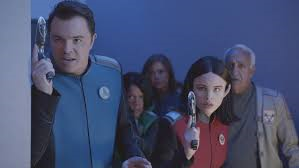 And yes, MacFarlane has a liberal world view which comes out now and again. But I was pleasantly surprised to find he does not use his platfiorm to villify or unfairly castigate points of view he likely doesn't follow…at least not so far. MacFarlane has already begun to delve into hot button issues such as homosexuality and gender orientation but with tact and civility.
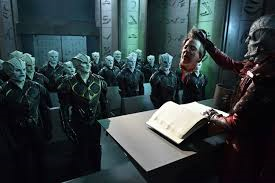
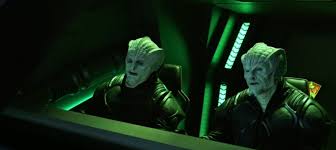
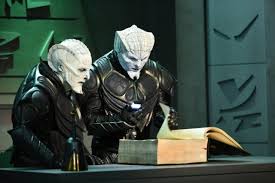
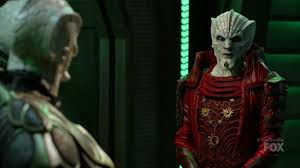
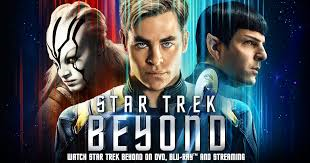
 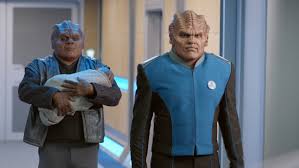 For example, the Moclus, the all male planet, has an inevitable male-male couple who procreate by hatching eggs. But because it is another species it is, frankly, not as in your face as the heavy handed presentation of Sulu's "husband" in Star Trek: Beyond.
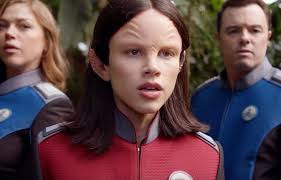 To be fair Roddenbury founded the Star Trek universe on the examination of the sensitive social issues of his time: racism, class structure, the hazards of interfering in less technologically developed cultures, the definition of life forms, the inherent dangers in protracted automated warfare, the tyranny of nanny states, the constant struggle with our baser natures. So it would be hypocritical of me to complain if The Orville explores the hot button issues of our times. And I was very pleased to find that MacFarlane is following Roddenbury's example. The Orville so far has reviewed these areas wth a certain dignified grace.
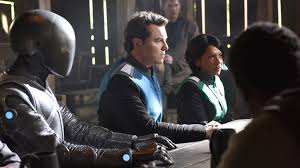 One story in particular dealt with the single-gender society in a way that I believe fairly examined the different sides – a rarity when most liberal agendas include screaming over their conservative opponents instead of debating. The issue of gender identity at birth became a leading topic, and was treated with thoughtful clear headed discussion resulting in the crew uniformly taking the conservative side!
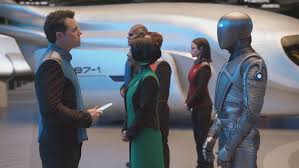 All this being said, it is possible Mr. MacFarlane could be luring the mainstream population in to lower the boom and cram yet another politically-correct driven anti-"everything traditional" agenda down the throats of anyone near by. But for the moment Mr. MacFarlane has created an extremely well written show for its genre. Funny, occasionally bawdy, but thoughtful.