
SHORT TAKE:
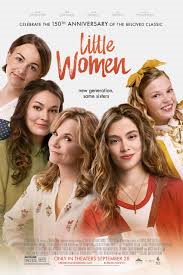
Artfully modernized, faithfully told beautiful adaptation for the contemporary audience of the classic story, Little Women.
WHO SHOULD GO:
Everyone. Anyone. All ages. Please go, bring friends.
AND IF YOU LIKE THESE REVIEWS PLEASE SUBSCRIBE! THEN YOU'LL GET EVERY NEW REVIEW SENT STRAIGHT TO YOUR E-MAIL!!
GO TO THE BOTTOM OF THE LEFT HAND SIDE AND TYPE YOUR E-MAIL IN – IT (SHOULD BE) THAT EASY. ANY PROBLEMS PLEASE SEND ME A COMMENT AND I'LL DO MY BEST TO RESOLVE YOUR ISSUE.
LONG TAKE:
 We know this story extremely well, inside and out. I’ve read the book. I’ve taught it as part of our curriculum several times over the span of homeschooling six kids. I have seen a number of filmed versions including the appalling one where
 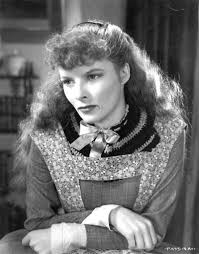 Katherine Hepburn was way too old to play Jo and a lovely one with
 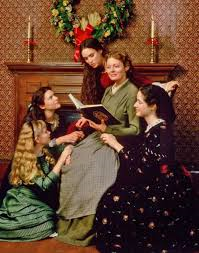 Susan Sarandon as Marme. Our family was IN the danged play at our local community theater 12 years ago. My second oldest daughter played the lead, Jo, and the rest of our family either had parts on stage, behind the scenes or were present for every rehearsal cheering their siblings on. We’ve incorporated lines and expressions like "love lornity" and how French is a "silly slippery language" from the play into our traditional family sayings. Shoot, with four girls of our own, there were times I've felt as though we were LIVING scenes from Little Women…but I had never truly appreciated the story of Little Women until I saw this 2018 modernized film.
Little Women, marking the 150th anniversary of the publication of the source book, has been refurbished to modern day and is arguably one of the best movies I have seen in years. The film makers have adapted this Civil War era story to the 21st century with the same skill as the  innovative Cumberbatch-Freeman Sherlock updated the original Conan Doyle invention, or
  Steve Martin refreshed Cyrano de Bergerac into the whimsical Roxanne – that is to say with both seamless, creative invention and great respectful affection for the source material. It is a testament to the timelessness of the concepts foundational to Louisa May Alcott’s novel that it translates so well, but it is the talent of the gifted screenwriter Kristi Shimek, newbie director Clare Niederpruem and the actors that makes it blossom onto the screen.
For the benefit of anyone suffering the misfortune of not being familiar with the story, the premise of Little Women follows Jo March from childhood to womanhood as she and her sisters grow and mature together in the warm embrace of loving parents and stalwart friends through joys, embarrassments, mistakes, misunderstandings, and the other comedies and tragedies of life.
For those who are blessed with a familiarity of the subject, rest assured the writer and director have a love and respect for the material. The tale has not been changed by the displacement in time, but is transformed into an image more familiar and therefore more accessible to 21st century audiences, without altering a single iota of character development, story arc, or theme. 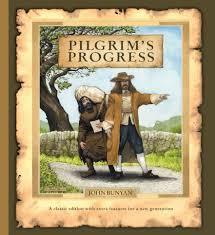 John Bunyan’s famous Christian allegory, Pilgrim’s Progress, is as notable here as it was in the original script and novel, forming the underlying themes of passage from human frailty and sin to redemption, suffering the travails of life with forgiveness, courage, and love. Instead of the Civil War, the father is deployed overseas.
 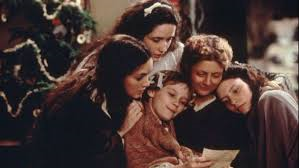 Instead of letters they have Skype.
 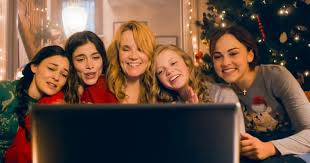 The charity the original characters perform for a starving mother and children next door is done at a homeless shelter. The children are homeschooled and the social faux pas are appropriately updated to reflect the unwiseness of modern youth. As many lines as can be are pulled directly from the book, but updates, where needed, are appropriately made.
I’ve known Lea Thompson was a fine actress ever since I first saw Back to the Future at the theater in 1985. I was floored to discover, some 20 minutes into the movie when Marty goes back to the past, that 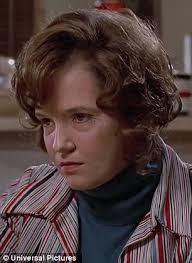 the same woman who played a dowdy, overweight, burnt out, disillusioned and embittered alcoholic was NOT in fact 50 years old but a
 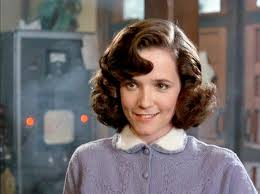 brilliant little 24 year old actress who nailed the tragic first version of Lorraine in the opening scenes of that now famous movie.
 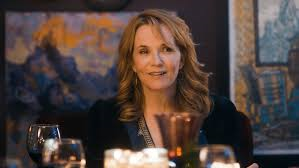 She hits the bull's eye again in Little Women as Marme, the gentle, warm and archetype maternal figure of the March family.
I was honestly not familiar with any of the other cast members before seeing this Little Women. Most harken from TV shows and B movies, but every one of the performers is not only tremendous in their roles, but fit into and shape their characters so perfectly I will have difficulty ever thinking of these March family members and friends as anyone but them (with the except of our own family members, of course).
 Sarah Davenport is perfect as the high strung, impulsive, often unthinking and deeply emotional Jo.
 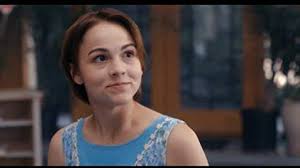 Allie Jennings ditto as Jo’s favorite sister and alter ego, the gentle, kind and resolute Beth.
 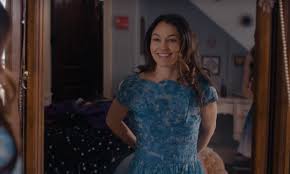 Melanie Stone is lovely as Meg, wanting nothing more than to be a wife and mother.
 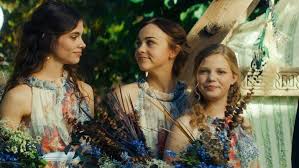 Elise Jones and
 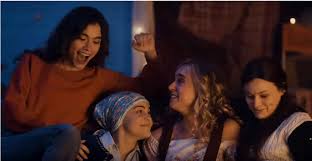 Taylor Murphy playing the younger and older Amy, respectively, do a great job of the self absorbed and easily smitten youngest sister without losing Amy’s vulnerability.
 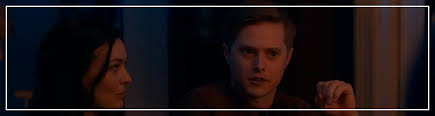 Lucas Grabeel steps into the part of Laurie with just the right combination of awkward and delightful as the lonely young man next door
 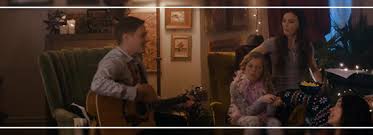 anxious to join a family.
 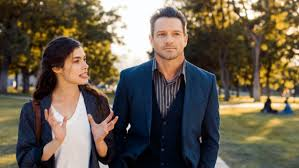 Ian Bohen as the caring and insightful Professor Freddie Bhaer,
 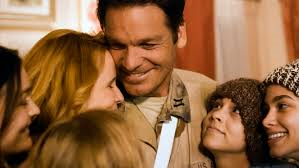 Bart Johnson as the warm and loving Papa March,
 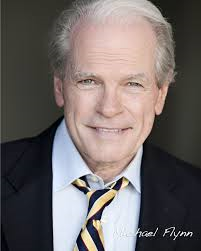 Michael Flynn as Laurie’s kind and thoughtful grandfather Mr. Lawrence,
 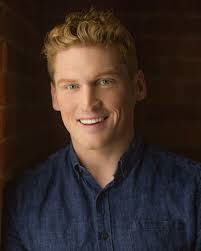 Stuart Edge as Brooke,
  Barta Heiner as Aunt March and even Goober the cat contribute their support to this brilliant and beautiful film adaptation for the contemporary audience.
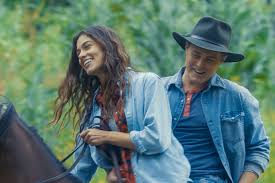 The dress and sets are simple and fit the time and place of a family of well cared for and spiritually sound young women. The sweetly fitting soundtrack is decorated with modern day songs which accurately reflect the needs of the film's moods.
 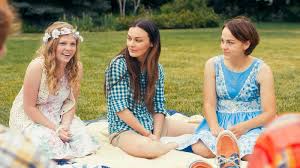 Most of the action takes place in and around the March and Lawrence homes. The filming style is of flash – backs and forwards – as time moves on and memories are rekindled by events in Jo’s dynamic present.
 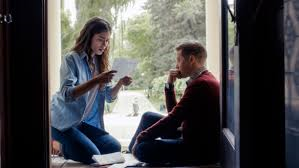 And I really enjoyed the cinematically creative and tasteful way Ms. Niederpruem conveyed the passage of time.
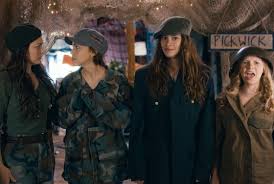 Go see this wonderful version of Little Women. Read the book either before or after…or both…and gain a fresh new appreciation for this enchanting, inspiring and enduring tale of spiritual growth, family strength and the power that love and faith have over the buffets and trials of life. Bring Kleenex.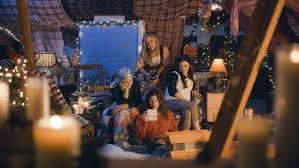
 Popular wisdom says that origin books are almost always better than the movies based on them. While often true the reverse is more prevalent than you might think.
 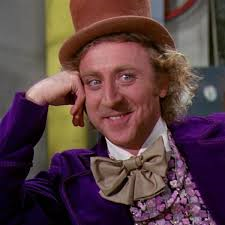 Take Gene Wilder’s Willie Wonka and The Chocolate Factory. The movie, based on the book Charlie and the Chocolate Factory, did not wander far from the source material. Though since Dahl wrote both the book and the first draft of the screenplay that is not surprising. But the movie had an added fillip which, to me, was the most memorable moment in the story. Charlie had snuck a sip of Fizzy Lifting Drink and Wonka tells Charlie because of that he won’t get any reward. But it’s a test.
 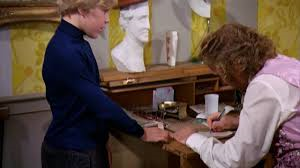 Despite Wonka’s cruel and angry behavior to him Charlie gives Wonka back the gobstopper souvenir instead of selling it to Wonka’s competitor. Wonka says: "So shines a good deed in a weary world," then tells Charlie he is to inherit the entire factory. It’s a beautiful moment masterfully played out between Wilder and Ostrum. But it wasn’t in the book. To me it was the crown jewel of the adventure.
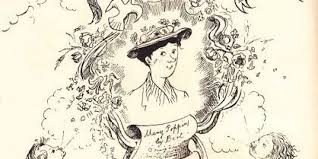 Mary Poppins was a series of adventures with the title character coming and going into and out of the Banks' children's lives, as the winds changed: trips around the world, tea parties on the ceiling, learning to cook when the Banks’ cook goes on leave, the birth of other children in the Banks' household, etc – some knit into the movie, most not. But no where does it have the central theme of rescuing not the children, but ultimately the Banks’ children’s father, despite the fact, according to the movie
 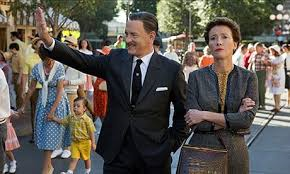 Saving Mr. Banks, this was the intent of her stories. Apparently she was just too coy with the theme. The movie, however, makes this beautiful theme crystal clear.
 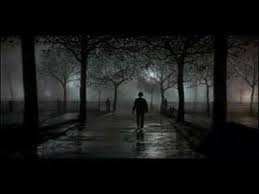 The hair on the back of your neck will stand up and the hardest will get teary watching a defeated Mr. Banks, knowing he is about to be fired, believing he has failed his children, stand, in the dark at the bottom of the steps of St Paul’s Cathedral where the children had wanted to buy feed for the birds. As the instrumental version of Feed the Birds swells in the background and you know there is a change of wind coming for HIM, you know you are experiencing one of the great moments of cinema. This was not nor could have been adequately portrayed in the book.
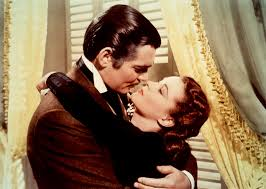 Gone With the Wind, while a classic book did not capture the imagination the way the movie did with its sweeping panoramas of Tara in her glory and stricken Confederate soldiers at the railroad station or the burning of Atlanta all against Max Steiner’s magnificent soundtrack and the incendiary chemistry between Leigh and Gable as Scarlett and Rhett played out in Technicolor.
 Harry Potter series, which are based on a sequence of books so packed with rich magical ideas and creativity that even in 8 movies the filmmakers could only make a Reader’s Digest version. Short shrift was given to some characters like
 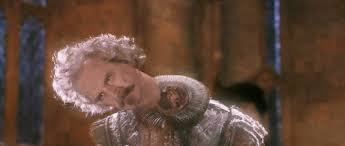 Nearly Headless Nick and some were left out altogether
 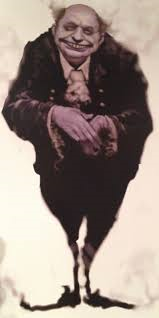 like Peeves; and some brilliant parts of the books were sadly absent from the films: Harry dressing down Lupin for virtually abandoning his wife and child; the previously misjudged Fleur Delacour declaring her continued devotion to the now scarred Bill Weasley saying "I am beautiful enough for the both of us." It was obvious the movies were a labor of love but just couldn’t do the books justice.
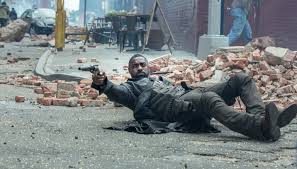
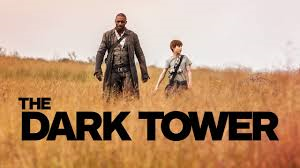
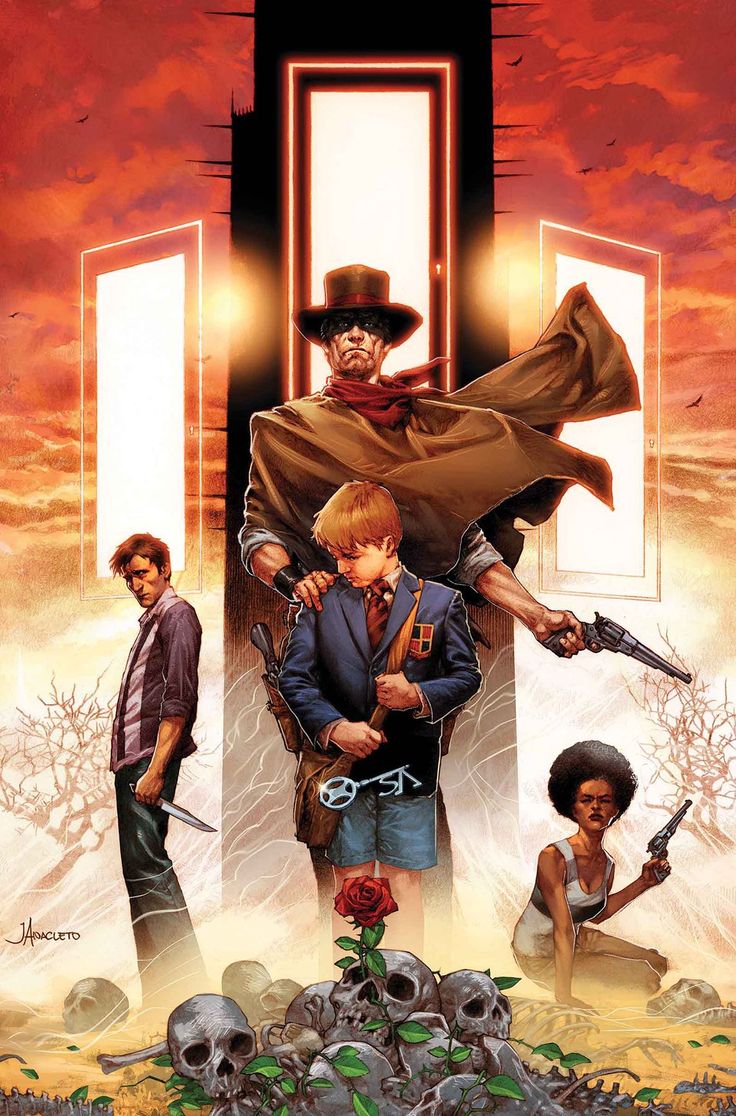 Then there’s Dark Tower. *weary sigh* I once was a fan of Stephen King. That was before he went on a diatribe against the pro-life movement, but that’s a story for another blog. During the height of my King fan-reading I tried to slog through the series of Dark Tower books AS they were coming out. I couldn’t get past the third of what would eventually be eight. It was an incomprehensible mess. It seemed as though King would wake up every morning and before his first cup of coffee spill, without filter, whatever thoughts came to him. Then the next day he would do the same thing, making weak efforts to tie what he’d written the previous day into the current days "work". There were lobster monsters and vampires, slow mutants and doomed theme parks, fatal rides on mining cars and homages to his other books. And in the book ROLAND, THE GUNSLINGER THOUGHTLESSLY MURDERS JAKE just to be able to continue his quest towards this Dark Man who, as time goes on, seems to not be quite as bad as the the Gunslinger himself. Then at the end of the 8th book (I read the Wikipedia synopsis recently as I didn’t want to wade through the rest of the books) King pretty much gives a middle finger to his audience, leaving the Gunslinger to start his quest all over again with no real resolution. The series reads like a challenge to see just how devoted his fans really are – like an insecure child constantly misbehaving just to be forgiven, demanding his parents prove they love him.
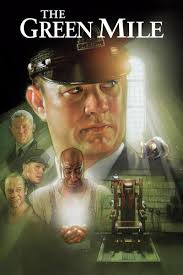 Green Mile was a beautifully written modern parable and I’d be hard pressed to say which I liked better – book or movie. They were both well done, the former by King the latter by Frank Darabont.
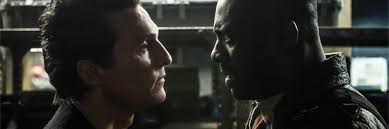 So they took the general idea of the Dark Tower quest, the 3 main characters – Roland, Jake and Walter the Dark Man, SOME of the weirdness
 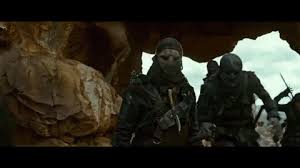 (animal mutants wearing people faces) and created a STORY.
 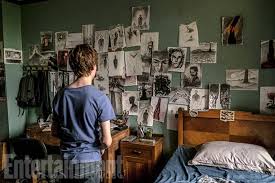 Fatherless Jake and his widowed then remarried mother live in a New York beset with signs of coming cataclysm – earthquakes and eerie storms. His visions of the gunslinger’s Wasteland – a world which has "moved on" – and his violent outbursts drive his desperate mother to seek help from psychiatrists who ultimately schedule him for a stay at a retreat for troubled youths. When Jake realizes the social workers who have come to take him are mutants from the Wasteland of his visions he escapes through a portal in an abandoned house possessed by a demon sent by the Dark Man….and THIS is the version of the story that makes SENSE!
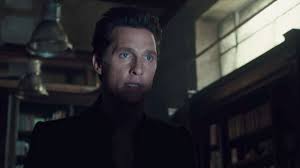 The Dark Man, Walter, is played like a sinister Vegas magician by Matthew "Interstellar" McConaughey. Not his fault – just the way it’s written. McConaughey does his best to tread that fine line between over the top scene chewing bad guy and seductive Hannibal Lector-like serial killer. The result is serviceable but nothing to write home about.
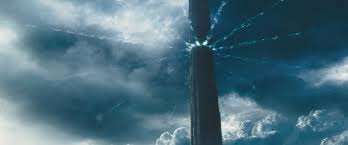 If the Dark Tower is the force for good, why is it DARK? The thing looks pretty darned creepy as portrayed – not some bastion of good and cohesive force. Traditionally, especially in a mythos-like fable of good and evil something this DARK would represent evil. And why is something DARK under attack from the DARK Man? The name similarities are either a product of a direct intentional relationship or sloppy writing. If the former there is a glaring inconsistency. As this is a completely invented universe we have no context for making a distinction and are given no explanation. Where did the mutants come from and why does the Dark Man make them wear masks? Why do the "mutants" look like large versions of Ratty from Wind in the Willows? How did the Wasteland come to "move on" and where did that expression come from? Not to be pedantic or facitious but where did it move to? Just an odd phrase for something falling apart. How does the Gunslinger have the power to resist the Dark Man’s magic and if the Dark man has the power to put people under his control just by waving at them why does he play with Roland like a sated cat with a mouse instead of just sending people by the thousands to overwhelm him?